
They're the Doctor
- Dec 21, 2017
- 5 min read

In the 1960s, a little science-fiction program invaded television and slowly became a national phenomenon. One of the first shows to feature an alien as a good guy, it took viewers across space and even through time. It eventually suffered cancellation but then was revived and is still going strong today. Fans dress as their favorite character from this series and attend conventions around the world.
No, it's not Star Trek. Okay, forget that; try this one.
Out of the early sixties came one of the coolest characters Britain ever produced. This guy liked to dress up (sometimes sporting a bowtie), he was good with gadgets, and he routinely saved the world from conquest or destruction. Most importantly for his longevity, a number of different actors--not all of them English--have put their own unique spin on this character.
No, he's not James Bond. I'm talking about the Doctor.
"Doctor Who?"
Exactly.
Though vaguely aware of the show as a kid, I had no interest at all in Doctor Who because it was low-budget and foreign. (The irony of that: one of my favorite programs was Ultraman.) I was well into my thirties before I was enticed to check out the snazzy new version on Netflix. I liked Christopher Eccleston from the few movies I'd seen him in, and I found the premise intriguing, especially the part where the alien protagonist could cheat death by becoming someone new.

For you non-fans, I'll explain. The Doctor (that's what he calls himself) is a Time Lord, an extra-terrestrial with two hearts, a highly developed brain, and the quirky ability to "regenerate" when he is mortally wounded (or, in one case, already dead). So, in times of significant physical trauma, he gets a brand new body. In fact, he not only looks totally different, he acts it, as well, and that is what really gives DW its staying power.
Just imagine it: the main character is a grumpy grandpa with longish white hair and an Edwardian fashion sense. He's the smartest guy in the room, and he always makes sure you know it. You've watched him use those uncanny wits time and again to get himself and his baffled companions out of any situation, but he's getting fatigued and his schtick is, too. Voila! A couple of camera tricks and a humming noise, and that tired old character has gotten a bit younger and more spry. Like a cosmic hobo, he plays the recorder and acts childishly, hiding his cunning until he needs it.
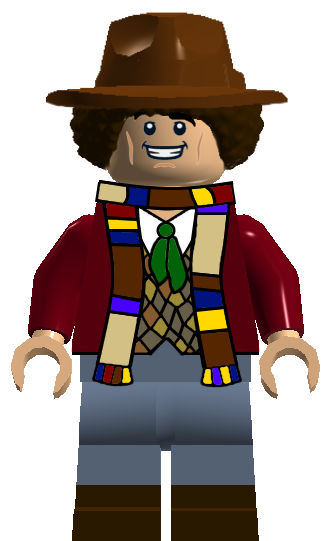
So, the first Doctor (William Hartnell) became the second Doctor (Patrick Troughton) in 1966, and the show was reinvigorated. When Troughton decided it was time to split, the silly little bohemian became a suave, physically imposing, tech-savvy scientist (Jon Pertwee) who bested adversaries with his Venusian Aikido moves. The persona he took on next was the one most closely associated with Doctor Who: the charming, smiling, curly-headed giant with the overlong scarf (Tom Baker) who played with a yo-yo and offered everyone jelly babies. He stuck around the longest, and the changes that followed happened quicker because the actors either tired of the role or were forced out. So, the younger, blonder, polite fellow with the celery on his lapel (Peter Davison) gave way to a patchwork suit, a cat motif, and a love of poetry (Colin Baker), which in turn made room for a Scottish accent, question mark-covered sweater-vest, and ubiquitous umbrella (Sylvester McCoy). This last Doctor went off for a few years and then returned long enough to develop a taste for Victorian costumes and get the crazy idea that he was half-human (Paul McGann).
But I didn't witness any of that. When I started watching, it was the early 21st-century adventures of the Doctor, when he had just become a broody but excitable younger man (Christopher Eccleston) who sported a leather jacket and Northern-English accent. They were hit and miss but mostly fun, and the Doc himself was, as he loved to say, "fantastic!" Then, before I had time to brace myself, he suddenly got even younger and faster talking, wore pinstriped suits and sneakers, and dove into battle shouting "Allons-y!" That guy went out in a literal blaze of glory so we could get the youngest-looking Doctor ever (Matt Smith), one who ironically felt really old, thought bowties were cool, and loved to hug. It took some getting used to when he transformed into a much older-looking but energetic gent (Peter Capaldi) who announced in a Scottish brogue that he was no longer a hugger, but the sonic sunglasses and electric guitar helped endear him to us.
And to think this brilliant concept was the practical result of a simple need: to retire the lead actor and put someone new in his spot. How many producers think that way, even in science fiction? Sydney Newman, head of production at BBC, didn't think, "I'll just get someone who looks like Hartnell to take his place," or "How about a new Time Lord succeeds the Doctor as the pilot of the TARDIS spacecraft?" He decided that the alien protagonist would just rejuvenate his body, and then he cast someone who looked and acted completely different from his predecessor. Astonishing! Because of that kind of thinking, we've gotten some amazing stories and story possibilities, not to mention the incredible variety of lead performers.
So, the show essentially gets to reboot itself every few years with a new star and usually a whole new supporting cast, keeping only the setting (the interior of the TARDIS). You get to see more trips through time and encounters with alien races, and at the same time you get to discover how the "current" Doctor will react to these stimuli and how he will get out of any new predicament. There is also the occasional return of a beloved character, who will likely have a whole different dynamic with the regenerated protagonist, plus we'll get those nice little moments where the Doctor recalls things from his past lives--things that technically happened to other men but which he remembers. And, as of Christmas 2017, Doctor Who will experience one of its most significant reboots when the main guy switches sexes for the first time, taking off on all kinds of new adventures.

As a writer, I wish I could make use of such a terrific concept in my work. But, astounding as it may sound, character renewal really hasn't been used like this outside DW, probably because it's unique and would be instantly recognized if utilized elsewhere. I'm sure Newman and his writers had no clue what they'd grabbed hold of back in '66, when they needed to continue the show without their original star; they not only got endless new leases on life for the show, but they also hit on a story tool that's allowed fans to discuss the Doctor's rich history of continuous adventures while at the same time gushing over who their "favorite" Doctor is. Fantastic!


Comments